Drainage Solutions for Rural Property That Last

A driveway that washes out after a hard rain is rarely just a driveway problem. Water may be coming off a cleared slope, collecting at a low point, or following an old woods trail toward the road. Effective drainage solutions for rural property start by finding where water originates, where it naturally wants to go, and what needs protection along the way.
On acreage in the Florida Panhandle and Southern Alabama, heavy rain can expose weak spots quickly. Soft ground can limit equipment access, standing water can damage pasture areas, and runoff can cut channels through a new gravel drive before it has time to settle. The goal is not to force every drop of water off the land. It is to move water in a controlled direction while protecting the improvements that make the property usable.
Start With the Water, Not the Washout
The visible damage is usually downstream from the real issue. A rut in a driveway may be caused by an undersized culvert. Mud near a homesite may come from a shallow swale that was filled during clearing. A wet pasture gate may be sitting at the lowest point on the property, where water has collected for years.
A proper site assessment looks at slope, soil conditions, existing drainage paths, tree cover, road elevations, nearby ditches, and the intended use of the land. It also considers what will change after work begins. Removing brush and trees can alter how rainfall reaches the ground. Building a driveway, pad, fence line, or access road can redirect runoff if grades are not planned with care.
This is why drainage work is best coordinated with clearing, grading, and road construction rather than treated as a repair after the fact. The right approach depends on the parcel. Sandy ground may absorb water quickly but still erode around concentrated flow. Clay-heavy soil may hold water near the surface long after a storm. Flat land needs a carefully established outlet, while sloped land needs measures that slow and guide runoff.
Grade the Land for Positive Drainage
Grading is the foundation of most rural drainage work. The land does not need to be perfectly flat. In fact, a flat-looking area can be a problem when it gives water nowhere to go. What it needs is a deliberate grade that directs water away from buildings, road surfaces, work areas, and other improvements.
For a homesite or shop pad, the finished grade should fall away from the structure. Small changes in elevation can make a major difference in whether rainwater drains off or ponds beside the foundation. On larger sites, broad swales can carry surface water gradually toward a suitable drainage area without creating a deep, hard-to-maintain ditch.
Grading also matters after land clearing. Stumps, root balls, brush piles, and disturbed soil can leave uneven ground that catches water. A clean finish grade creates more usable acreage and reduces the chance that rain turns cleared land into a series of muddy depressions.
Preserve Natural Flow Where It Works
Natural low areas, drainage ditches, and established draws often exist for a reason. Filling or blocking them without creating another route can push water toward a driveway, fence line, neighboring tract, or building site. In many cases, the durable solution is to work with the natural flow instead of fighting it.
That does not mean leaving every wet area untouched. It means understanding the drainage pattern before changing it. A contractor can shape grades, improve an existing channel, or install crossings that preserve access while allowing water to pass safely beneath it.
Build Driveways That Shed Water
A rural driveway takes more abuse from water than most property owners expect. Rainfall runs across the surface, traffic packs gravel into the soil, and water can travel along wheel paths if the road has lost its shape. Once runoff starts cutting through the drive, adding another load of gravel usually provides only a temporary improvement.
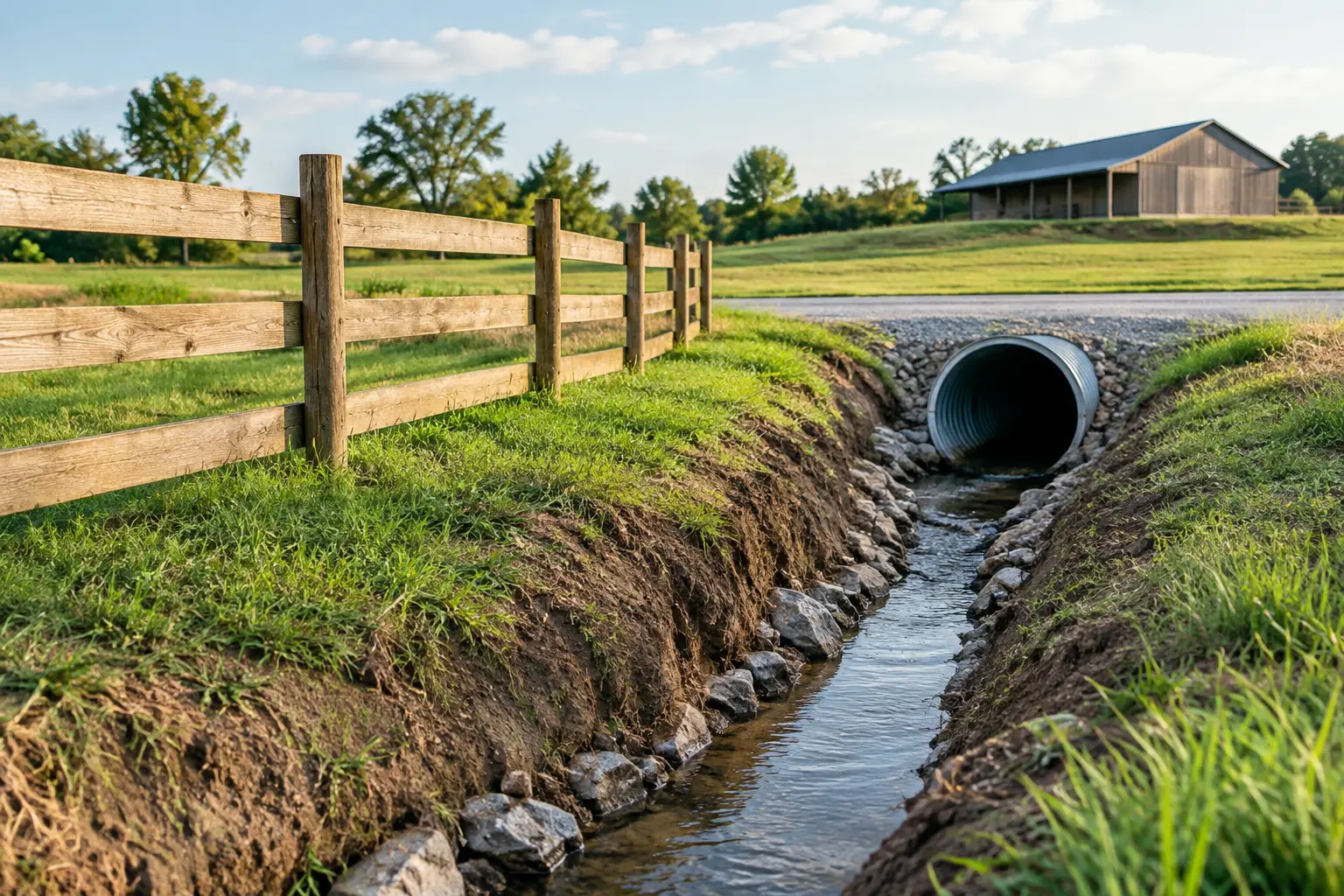
A dependable gravel driveway needs a crowned or properly sloped surface so water sheds to the sides. Ditches or swales beside the road provide a place for that runoff to go. Where water crosses the driveway, culverts carry it underneath instead of allowing it to flow across the gravel.
Culvert size, placement, and elevation all matter. A pipe that is too small may clog or overtop in a heavy storm. A pipe installed too high can leave water trapped on the uphill side. One set too low may collect sediment and become difficult to maintain. The correct installation accounts for expected flow, ditch depth, road base, and the grade of the surrounding ground.
On long drives or rural access roads, drainage may include turnouts, cross-drain culverts, shaped roadside ditches, and stabilized outlets. These features keep water from building speed and cutting into the road base. They also protect the investment in gravel, which is especially valuable where the road must support pickups, trailers, tractors, feed deliveries, or construction traffic.
Use Ditches and Swales With Purpose
Ditches are practical, but they should not be dug simply because water is present. A ditch that is too steep can erode. One that has no outlet will hold water. One placed too close to a road can weaken the road edge or create a difficult crossing.
A shallow swale is often a better fit near a homesite, yard, or open field because it moves water gradually and is easier to mow. A more defined ditch may be needed alongside a driveway or at the base of a slope where runoff is concentrated. The key is creating a continuous path from the collection point to a safe outlet.
Where flowing water has enough force to scour soil, stabilization may be needed at the outlet or along vulnerable sections. Depending on site conditions, that can include rock, vegetation, erosion-control material, or reshaping the channel to reduce velocity. The best choice depends on how much water the area receives and how quickly it moves during major rain events.
Protect Pastures, Gates, and Fence Lines
Drainage is not only a building-site concern. Waterlogged pasture areas can reduce usable grazing ground, create mud around feeders, and make livestock handling more difficult. Gates placed in low spots often become deep, rutted areas because vehicle and livestock traffic work wet soil into mud.
When planning a pasture or fenced acreage, consider access routes, gate locations, water flow, and high-traffic areas together. A small amount of grading or a properly designed crossing can keep a gate usable after rain. In some situations, gravel and base material are appropriate around entrances and service areas. In others, moving the gate to higher ground is the more reliable long-term decision.
Fence lines also need attention near drainage channels. Water can undermine posts, carry debris into wire, or create washouts beneath a fence. A planned crossing or adjusted fence alignment may prevent repeated repairs while keeping livestock secure.
Avoid Quick Fixes That Create Bigger Problems
Some drainage repairs look useful in dry weather but fail when the next major storm arrives. Piling dirt at the edge of a driveway can trap water on the road. Deepening a ditch without an outlet can create a standing-water problem. Installing a culvert without checking elevations can send runoff toward the wrong area.
There is also a trade-off between moving water quickly and moving it safely. Fast water can be destructive. A drainage system should carry runoff at a manageable pace and release it where it will not damage soil, roads, structures, or adjacent property.
Maintenance remains part of the job after installation. Leaves, limbs, sediment, and tall vegetation can block culvert inlets and ditches. After heavy storms, inspect road crossings, driveway edges, and low areas before minor damage becomes a larger repair. A well-built system is easier to maintain, but no drainage feature is completely maintenance-free.
Plan Drainage Before the Next Phase of Work
The most cost-effective time to address water is before building a driveway, pouring a slab, setting fence posts, or clearing the entire tract. Planning drainage early allows each improvement to support the next one. Access roads stay firmer, building pads stay drier, and finished land is more functional for farm, home, recreation, or light commercial use.
J4 Land Development evaluates drainage as part of the larger site picture, including clearing, grading, access, and the way you intend to use the property. A custom scope can identify the practical work needed to protect the areas that matter most.
Before the next heavy rain finds the weak spot on your land, walk the property, note where water collects and crosses, and discuss a drainage plan built for the way you will use the acreage.
Comments