Erosion Control After Land Clearing That Works

A cleared property can look ready for its next phase, but bare soil tells a different story when the first heavy rain arrives. Erosion control after land clearing is what keeps valuable topsoil on your property, protects new driveways and drainage work, and prevents small washouts from becoming expensive repairs.
For acreage owners in the Florida Panhandle and Southern Alabama, this work deserves attention early. Intense rain, sandy soils, clay pockets, natural slopes, and existing drainage paths can all change how a cleared site performs. The right approach is not simply spreading seed or placing a few straw bales after the work is finished. It starts with a plan for how water will move across the property once trees, brush, roots, and leaf cover are removed.
Why Cleared Land Is Vulnerable to Erosion
Before clearing, vegetation slows rainfall and helps soil hold together. Tree canopies soften the impact of rain, leaf litter absorbs water, and root systems provide structure below the surface. Once that cover is removed, rain can strike exposed soil directly and begin carrying fine material downhill.
That loss is more than cosmetic. Topsoil is the most productive layer for pasture, landscaping, and future planting. Sediment can also fill ditches, clog culverts, cloud ponds, and create ruts along a new access route. On a building site, uncontrolled runoff may undermine a pad area before construction even begins.
The risk depends on the site. A flat parcel with stable ground may need straightforward temporary cover and careful grading. A property with long slopes, low areas, a creek, pond, or driveway crossing needs more deliberate drainage and soil protection. Clearing in a dry season can make the work easier, but it does not remove the need to prepare for the next storm.
Start Erosion Control After Land Clearing With Grade
Good erosion control begins with grade, not with a last-minute surface treatment. The goal is to guide water along controlled routes rather than letting it gather speed across open ground.
During site preparation, the land should be shaped with the intended use in mind. A future home site needs positive drainage away from the building area. A pasture may need broad, gentle drainage that avoids concentrating water in livestock traffic zones. A rural driveway needs a crowned surface, stable shoulders, and properly placed drainage crossings so runoff does not run down the road itself.
Avoid creating abrupt drops, loose spoil piles, or channels that point water toward a neighboring property. It is also wise to preserve natural drainage patterns when possible. Trying to force water against the lay of the land often leads to persistent wet spots, ditch erosion, or damaged access roads.
On sloped ground, grading may need to slow the water in stages. Shallow swales, diversion features, and broad drainage areas can reduce runoff velocity before it reaches a ditch or low point. The best solution depends on the soil, slope length, surrounding terrain, and where water already travels during a hard rain.
Keep Driveways From Becoming Drainage Channels
A gravel driveway is one of the most common places erosion shows up after clearing. If the road is lower in the center, water will follow the wheel tracks. If the road lacks outlets, runoff can build speed and cut into the gravel base or wash out the edges.
A durable driveway needs more than gravel placed on bare ground. Proper shaping, compaction, base preparation, and drainage crossings all matter. Culverts should be sized and positioned for the site, not selected by guesswork. Water must be able to move beneath or away from the road without carrying the road with it.
Roadside ditches also need a controlled outlet. A ditch that ends at a steep drop or unprotected slope can create a serious erosion point. In many cases, stabilizing that outlet is as important as building the ditch itself.
Stabilize Exposed Soil Quickly
Once final grading is complete, exposed areas should be stabilized as soon as practical. The longer bare soil remains open to rainfall, the more likely it is to move. Temporary protection is especially useful when permanent seeding, landscaping, construction, or pasture establishment will take place later.
The right ground cover depends on the season and the final use of the property. Seed and mulch can work well on suitable slopes when the soil is properly prepared and moisture conditions are favorable. Straw or erosion-control blankets may be a better choice on steeper areas, drainage swales, or places where seed needs protection while it establishes.
Mulch helps reduce the force of rainfall, holds moisture near seed, and limits surface crusting. Erosion-control blankets provide additional protection where water movement is stronger. They need solid soil contact and secure installation. Material laid loosely over rutted ground can lift, shift, or channel water underneath it.
For some rural properties, leaving selected ground cover in place during a phased clearing project is the most practical option. Clearing only the areas needed for a house pad, access road, fence line, or pasture expansion reduces the amount of bare ground exposed at one time. This approach can also preserve shade, privacy, and wildlife cover where those matter to the owner.
Protect Drainage Paths and Low Areas
Water naturally concentrates in low spots, swales, ditches, and culvert outlets. These are the locations most likely to need added protection. A small amount of flowing water across a broad grassy area may be harmless. The same volume moving through a narrow, unprotected channel can cut soil quickly.
Where runoff enters or exits a culvert, rock protection may be needed to prevent scour. The rock size, placement, and base preparation should match the expected water flow. Too little stone or poorly placed stone can wash out, while excessive rock in the wrong location can redirect water and create another issue downstream.
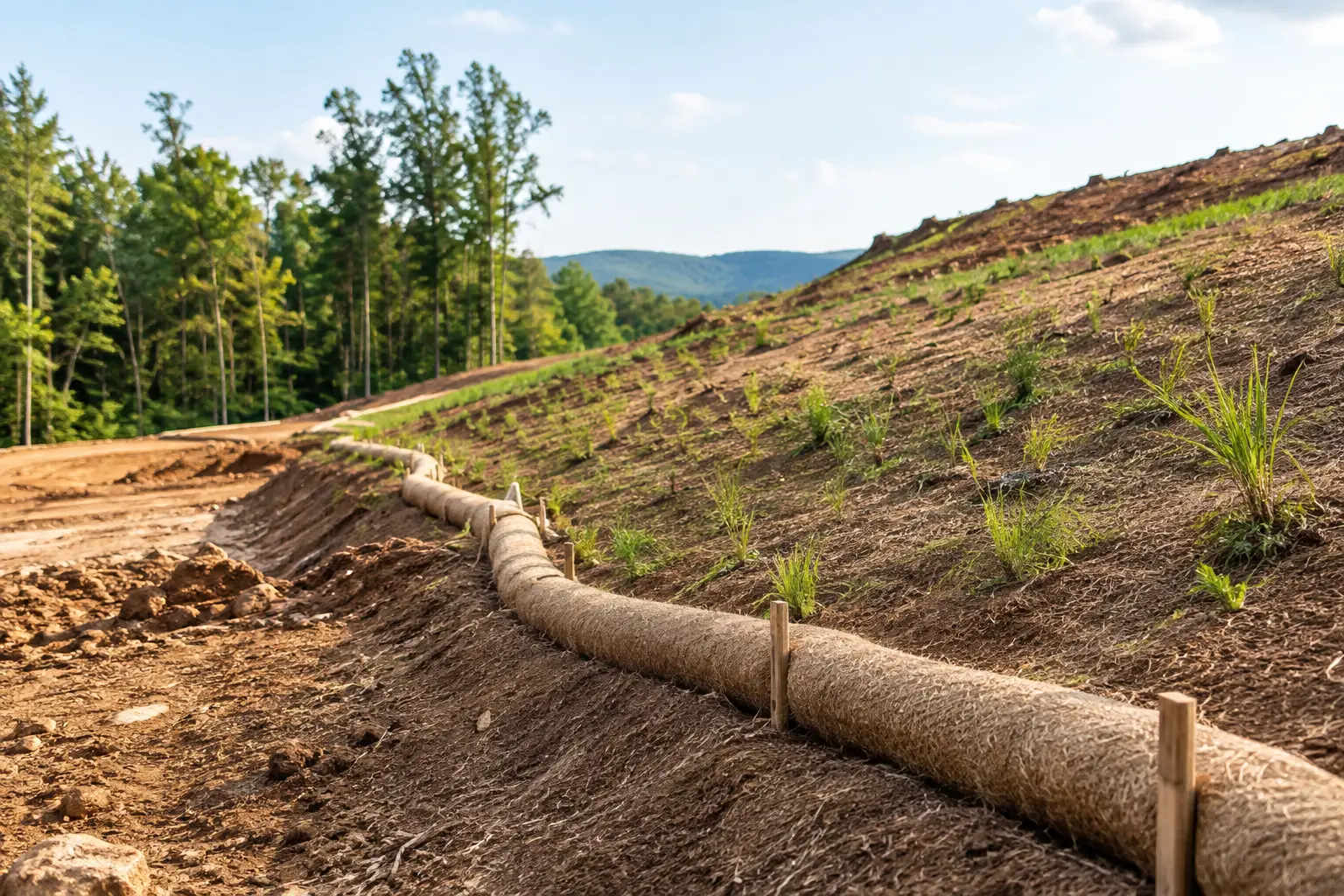
Sediment barriers can also help during active clearing or construction. They are temporary measures, not permanent drainage systems. Their purpose is to slow sediment-laden runoff before it reaches a ditch, pond, wet area, or property line. They must be installed on the contour, maintained after rain, and replaced if runoff flows around or under them.
If your property includes a pond, creek, or wet-weather drainage path, keep equipment, spoil material, and loose soil back from the edge. A buffer of undisturbed vegetation can reduce sediment movement and help maintain the stability of the bank.
Plan for the Property’s Next Use
Erosion control should match what the land will become. A cleared lot for a home needs stable grades around the building area, driveway drainage, and a plan for the period between clearing and construction. A farm property may need pasture establishment, stable gates and feeding areas, and drainage that holds up under equipment and livestock traffic.
For a recreational tract, the priority may be keeping trails, access roads, and creek crossings usable through wet weather. For a light commercial site, the plan may need to account for parking areas, building pads, and more concentrated runoff from hard surfaces.
This is why clearing, grading, drainage, and access construction work best when they are considered together. Clearing a site without knowing where the driveway, fence lines, structures, or water routes will go can create unnecessary rework later. A custom site assessment helps identify practical sequencing before equipment begins moving soil.
Inspect the Site After Every Major Rain
A property does not need to be large for erosion to cause trouble. Walk the cleared areas after substantial rainfall, particularly during the first few months. Look for muddy runoff leaving the site, small channels forming on slopes, exposed roots, gravel collecting at the bottom of a hill, standing water near a pad, or washouts around culverts.
Addressing a small problem early is usually straightforward. Waiting can allow water to deepen a rut, bypass a drainage feature, or carry sediment into places that are harder to clean. Keep ditches and culvert inlets clear of brush, leaves, and displaced soil so water can move as designed.
If the site changes, the erosion plan may need to change as well. Adding a driveway, expanding a clearing, building a shop, or installing fencing can alter traffic patterns and runoff. Durable land improvements are built with room for those next steps.
J4 Land Development helps property owners coordinate clearing, grading, drainage, and access work around the way they intend to use their land. A site-specific plan can protect the investment made in opening up your acreage while creating a dependable foundation for what comes next.
The best time to protect bare soil is before a storm tests it. Give water a controlled path, stabilize the ground promptly, and your cleared property will be better prepared for pasture, a home, reliable access, or the next stage of development.
Comments