Forestry Mulching vs Land Clearing: Which Fits?

A wooded parcel can be full of potential and still be hard to use. Dense brush may block a fence line, trees may prevent a driveway from reaching a homesite, and stumps can keep pasture or equipment from moving where it needs to go. When considering forestry mulching vs land clearing, the right choice comes down to what you need the property to do next.
Both methods improve overgrown land, but they produce very different results. Forestry mulching is often a fast, lower-disturbance way to manage brush and smaller trees. Full land clearing is the more complete solution when a site must support construction, farming, roads, drainage work, or a clean, open layout. Understanding the difference helps property owners invest in work that fits both the immediate project and the long-term plan.
What Forestry Mulching Does
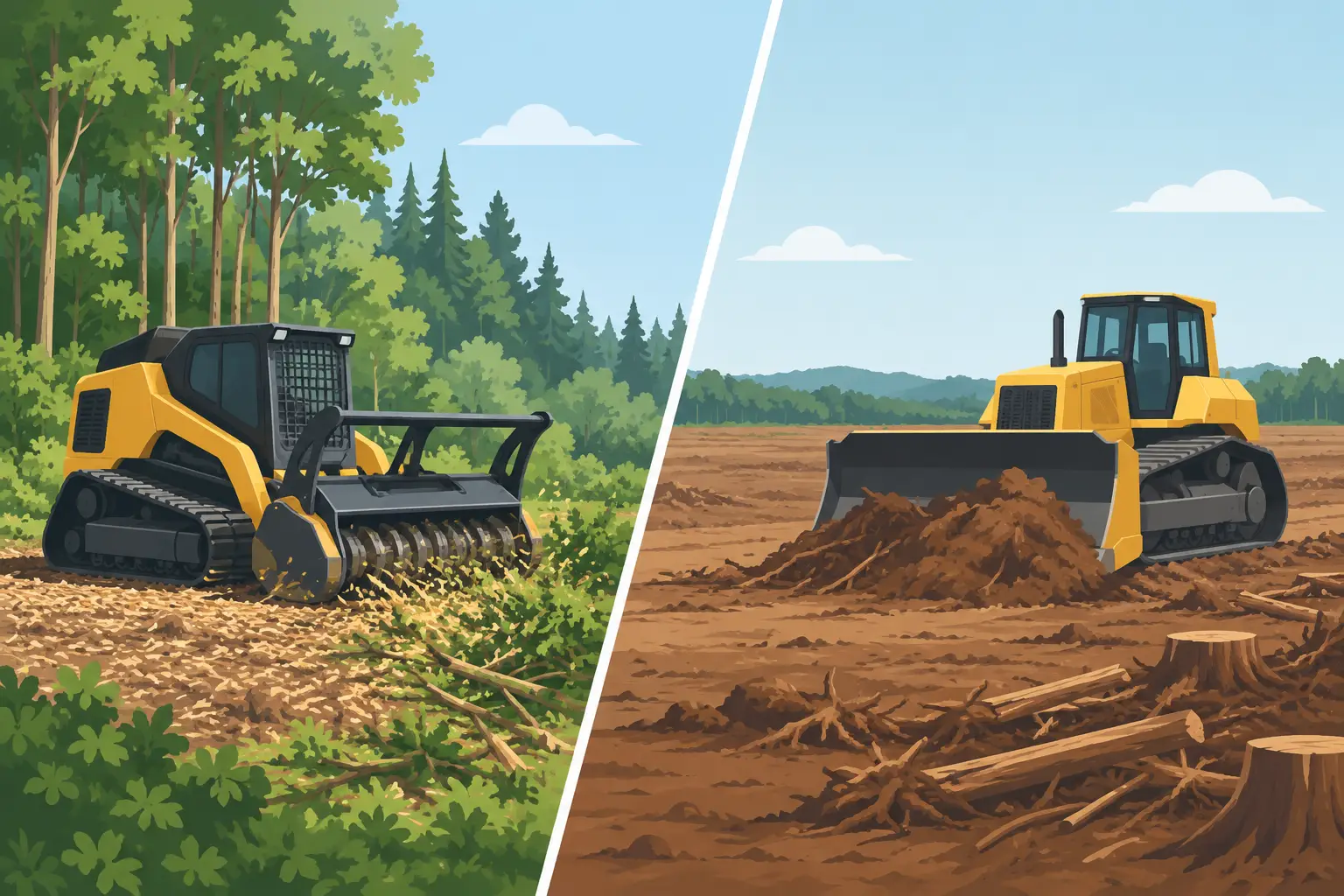
Forestry mulching uses a specialized machine to cut and grind brush, vines, small trees, saplings, and selected vegetation into mulch. That mulch is left across the ground as a protective layer rather than hauled away or burned.
For many rural properties in the Florida Panhandle and Southern Alabama, this is a practical option for reclaiming overgrown acreage without stripping the site bare. It can open trails, improve visibility, reduce thick undergrowth around existing trees, and create access for inspections, hunting, recreation, or future planning.
The mulch layer can help limit erosion and slow the return of some weeds by covering exposed soil. Because the work generally involves less digging and soil disturbance than conventional clearing, forestry mulching can be a good fit for uneven ground, wooded lots where mature trees should remain, and areas where preserving the natural character of the property matters.
Where Mulching Works Well
Forestry mulching is particularly useful when the goal is vegetation management rather than a fully construction-ready site. A landowner may want to make a neglected tract easier to walk, maintain a perimeter corridor, improve access to a pond or field, or clear brush beneath a healthy tree canopy.
It can also be an effective first phase for a larger project. Mulching may provide the access needed to evaluate terrain, identify drainage paths, confirm a proposed driveway route, or mark the most practical location for fencing. On a property that is still being planned, that can be a sensible way to improve usability before committing to more extensive work.
The Limits of Forestry Mulching
Mulching does not remove every obstacle from the site. Larger trees, heavy stumps, root systems, rock, and buried debris may remain. The finished surface can look clean and manageable, but it is not automatically ready for a building pad, a crop field, or a gravel driveway.
That distinction matters. If a home, barn, shop, commercial building, or pasture is planned, remaining stumps and roots can create problems later. Roots decay over time, which can leave soft spots beneath a driveway, slab area, or graded surface. Thick mulch may also need to be moved or managed before certain site-preparation steps can begin.
Vegetation can return as well. Mulching controls the existing growth, but it does not guarantee permanent removal of every stump or root. Follow-up maintenance may be needed, especially in fertile areas with aggressive brush, privet, vines, and fast-growing volunteer trees.
What Full Land Clearing Provides
Land clearing takes the work further. Depending on the property and intended use, it can involve removing trees, brush, stumps, roots, unwanted material, and debris. The site can then be graded and shaped to support the next stage of development.
For a property owner preparing to build, establish pasture, install fencing, or create dependable access, clearing delivers a more complete reset. It creates room for a homesite, barn pad, equipment area, field, road corridor, or utility route. It also allows the contractor to address obstacles below ground instead of simply cutting what is visible above it.
Proper clearing is not just about making land look open. It is about creating workable terrain. A durable result considers where water travels, where vehicles will turn, how equipment will enter the property, and whether the finished site needs to support livestock, construction traffic, or daily family use.
Clearing for Construction and Agriculture
Full clearing is usually the better fit when the land has a defined purpose that requires a stable, open surface. A new home site needs adequate room for building activity, drainage planning, utilities, and access. A pasture needs space where livestock and equipment can move safely. A driveway needs a firm base, appropriate slope, and drainage that keeps it usable after heavy rain.
On agricultural acreage, clearing can also make fence installation more reliable. Posts, gates, and corners perform best when crews have room to work and the fence line is free of brush, roots, and leaning trees. Clearing a corridor before building a perimeter fence helps protect the investment and makes future maintenance easier.
Forestry Mulching vs Land Clearing for Your Goals
The most useful way to compare forestry mulching vs land clearing is to start with the final use of the land, not just its present appearance. A property can look overgrown and still need different work depending on what comes next.
Choose forestry mulching when you want to reduce brush, improve visibility, open trails or access paths, manage vegetation around retained trees, or make land easier to inspect and maintain. It is often the more conservative approach when the property is not yet ready for development or when preserving existing tree cover is a priority.
Choose full land clearing when you need to remove stumps and roots, prepare for construction, establish open pasture, build a road, create a large equipment area, or grade the site for drainage and long-term use. It requires more intensive work, but it provides a foundation for improvements that mulching alone cannot support.
In some cases, the right answer is a combination. A property may need full clearing and grading around the homesite, driveway, barn, or pasture while forestry mulching is used along back acreage, trails, and wooded boundaries. This approach can control costs while keeping useful shade, privacy, and natural cover where they still serve the property.
Soil, Drainage, and Access Change the Scope
Every tract has its own conditions. Low areas, clay soils, wet-weather drainage, slopes, mature timber, existing structures, and narrow entrances all affect the equipment and methods needed. A job that appears straightforward from the road may require careful planning once crews see the interior of the parcel.
Drainage deserves special attention in this region. Removing vegetation can change how water moves across the property, especially where a new driveway, pad, or cleared field changes the natural surface. Grading and drainage work should be considered early, not after water begins collecting beside a road or building area.
Access is another practical factor. Equipment must reach the work area safely, and future access should match the owner's needs. If trucks, trailers, livestock equipment, or construction crews will use the property, the road and entrance should be planned for that traffic from the beginning.
Get the Sequence Right
Land improvement projects work best when tasks are completed in a logical order. Clearing may need to happen before fencing, but the final fence layout should be considered before trees are removed. A driveway may need rough access early in the project, then final gravel and grading after heavy equipment work is complete.
This is where using an integrated contractor can simplify the process. J4 Land Development can evaluate how clearing, access roads, drainage, site preparation, and perimeter fencing fit together instead of treating each item as an isolated job. That coordination helps avoid clearing an area twice, placing a driveway where drainage will create trouble, or installing fencing before the ground is properly prepared.
A Property Plan Is Better Than a Quick Fix
The lowest-impact option is not always the least expensive, and the most aggressive option is not always necessary. Forestry mulching can be an efficient choice for vegetation control and access. Full land clearing can be the better value when the property needs a durable foundation for building, farming, fencing, or reliable travel.
Before work begins, walk the property with the end use in mind. Identify where you want to enter, build, graze livestock, store equipment, install fencing, and manage water. A clear plan allows the right equipment and scope to be selected with precision, so the land is ready not only for the next task, but for the years of use that follow. Discuss your project today and request a custom quote based on your acreage, terrain, and goals.
Comments