When Stump Grinding for Acreage Pays Off

A freshly cleared tract can look ready for its next use until equipment, livestock, or a mower meets the first line of hidden stumps. Stump grinding for acreage addresses the part of land clearing that continues to affect safety, access, and long-term usability after trees and brush are removed. For property owners in the Florida Panhandle and Southern Alabama, it can be a practical step toward creating fields, home sites, driveways, fence lines, and dependable working ground.
The right approach depends on what the land needs to do next. Not every stump on every acre needs to be ground. On a wooded recreational tract, isolated stumps may have little effect on the property. On land intended for pasture, construction, routine mowing, or improved access, leaving them behind can create expensive problems later.
What Stump Grinding Changes on Acreage
A stump may sit only a few inches above grade, but its root system and remaining wood can affect much more ground than it appears to occupy. Stumps can damage mower decks, slow down bush hogging, interfere with grading, and create hazards for ATVs, tractors, and foot traffic. They also make it harder to establish a clean fence line or lay out a driveway without unexpected obstacles.
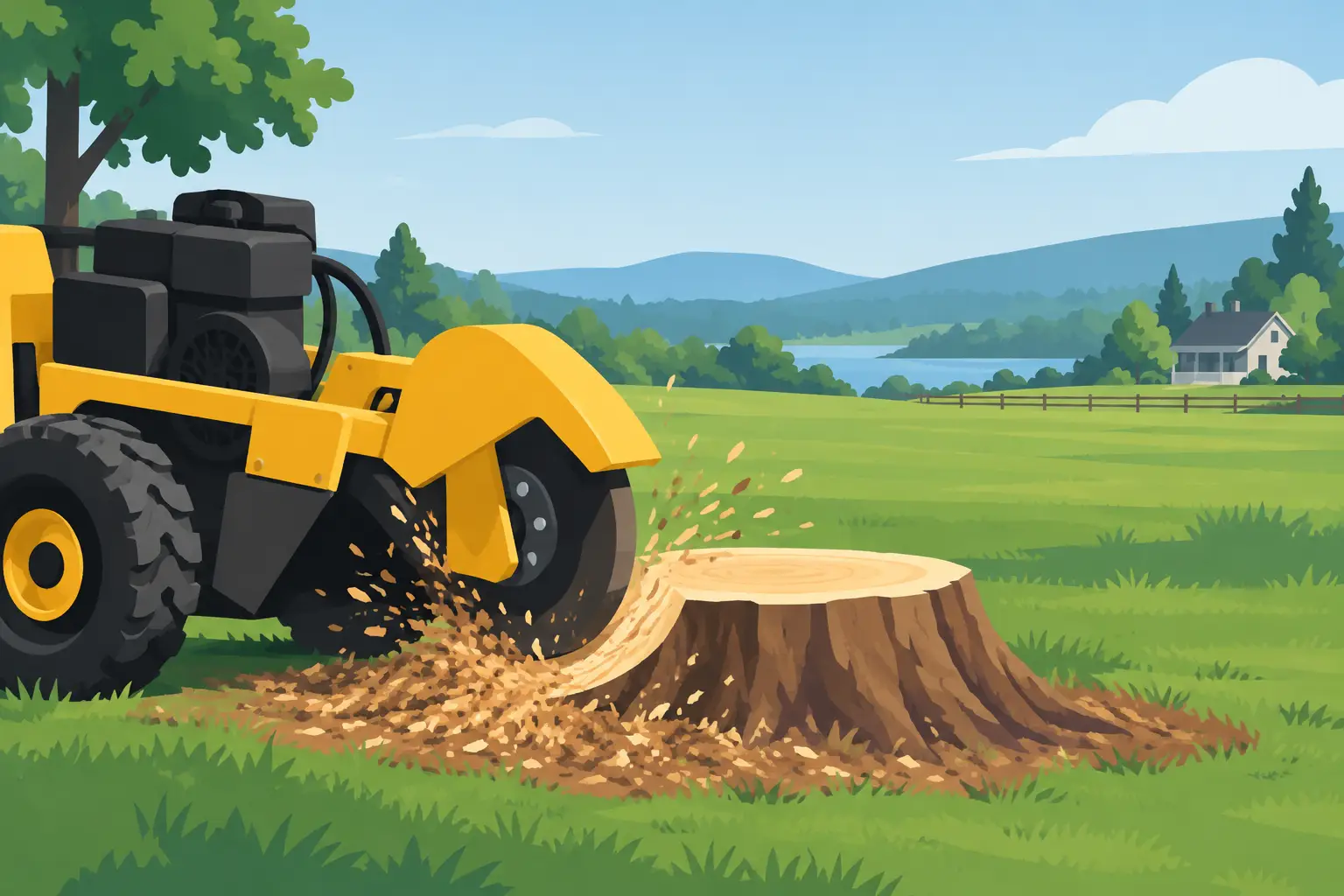
Grinding removes the visible stump and reduces it below the surrounding grade. The depth needed varies by project. A stump in an area that will remain natural may only need to be reduced enough to eliminate a trip hazard. A stump in a future yard, pasture, building pad, or driveway corridor generally needs a more thorough treatment so the surface can be finished and maintained properly.
This is different from simply cutting a tree low to the ground. A low-cut stump may look acceptable immediately after clearing, but it still limits how the land can be used. Grinding creates a more workable surface and allows the area to move forward into its intended purpose.
When Stump Grinding for Acreage Makes Sense
Stump grinding is most valuable where the land will receive regular use or additional site work. That includes homesites, barns, equipment storage areas, livestock pens, food plots, pasture conversions, driveways, and access roads. It is also useful along fence corridors, where roots and stumps can complicate post placement and make future mowing difficult.
For a homeowner building on raw land, grinding in and around the proposed house site helps prepare the area for grading, drainage work, and utility access. Removing stumps before these steps prevents crews from having to work around buried obstructions or return later to correct uneven spots.
On agricultural acreage, the decision often comes down to equipment use. If a tractor, mower, hay equipment, or sprayer must travel across an area repeatedly, stumps become more than an inconvenience. They create a pattern of slow, careful operation that wastes time and increases the chance of equipment damage. Grinding is often a sound investment in the parts of a property that must stay productive.
Access routes deserve special attention. A road or gravel driveway needs stable subgrade and predictable drainage. Stumps within the route can decay over time, leaving voids or soft spots that contribute to rutting and settlement. Removing them before building the road supports a more durable finished surface.
When Selective Grinding Is the Better Choice
Grinding every stump across a large tract is not always the most efficient use of a landowner's budget. If the goal is habitat improvement, timber management, or opening up selected trails, crews may focus on high-use areas rather than treating every stump across the property.
Selective grinding is common on larger acreage with a mix of open and wooded ground. A property owner may choose to grind around a new homesite, along a perimeter fence, through an access road, and within planned pasture areas while leaving less-traveled sections alone. This approach directs the budget toward the work that has the clearest functional benefit.
Stump size, species, density, terrain, and access all affect the scope. Large hardwood stumps typically require more time than smaller pine stumps. Closely spaced stumps in a former timber stand can call for a different plan than a few isolated trees around an old homesite. Wet ground, steep slopes, buried debris, and limited equipment access also influence how the work should be scheduled.
A site visit matters because acreage rarely behaves the same from one corner to the next. What appears to be a simple clearing project from the road may include drainage swales, soft ground, old fencing, uneven terrain, or dense root zones that need careful planning.
Grinding, Removal, and Forestry Mulching Are Different Jobs
Landowners sometimes use these terms interchangeably, but they solve different problems. Forestry mulching processes brush, small trees, and vegetation into a layer of mulch. It is an efficient method for opening overgrown land, improving visibility, and creating usable access without extensive hauling. However, it does not automatically eliminate larger stumps.
Traditional tree and stump removal may involve excavating the stump and major roots from the ground. This can be necessary when construction requires a completely clean area, but it also disturbs more soil and creates material that must be handled or hauled away. Grinding is often less disruptive at the surface and is well suited for many areas that need to be mowed, fenced, traveled, or graded.
The best process may combine methods. A tract may first receive forestry mulching or land clearing, followed by tree removal where needed, stump grinding in the work zones, grading for drainage, and gravel installation for reliable access. Coordinating these services in the right order reduces rework and helps protect the finished site.
Plan for Grindings and Finish Work
Grinding leaves wood chips and soil material behind. In a lightly used area, that material can often be spread and allowed to break down naturally. In a future lawn, pasture, building area, or driveway, it may need to be removed, redistributed, or incorporated into the site plan.
The ground can also settle as remaining roots decay. This is one reason building pads, roads, and finished grades should be planned with care. A contractor can identify areas where additional fill, compaction, or drainage work is appropriate rather than treating stump grinding as a stand-alone task.
If the goal is pasture or a maintained field, the finished surface should support mowing and equipment travel. If the goal is a fence line, it should provide room for correct post placement and future maintenance. If the goal is a driveway, stump treatment should be completed before base material is placed. Each use calls for a slightly different finish.
Questions to Settle Before Work Begins
Before requesting a project scope, identify the acreage that will receive regular use and the improvements planned for it. A clear purpose helps determine whether comprehensive or selective grinding is the better fit. Consider the future location of structures, roads, gates, fence lines, drainage routes, and open fields.
It also helps to think beyond the first phase of work. A narrow cleared path may be enough for initial access, but it may not be enough for construction vehicles, livestock trailers, fire access, or routine property maintenance. Planning the stump work around the property’s long-term use can prevent clearing the same ground twice.
J4 Land Development evaluates the condition of the land, equipment access, terrain, stump density, and intended use to build a practical project scope. That allows stump grinding to support the larger job, whether the next step is fencing, driveway construction, grading, or preparing a homesite.
The goal is not simply to make acreage look cleaner. It is to leave the ground safer to work, easier to access, and ready for the improvements that make the property serve its owner well for years to come.
Comments