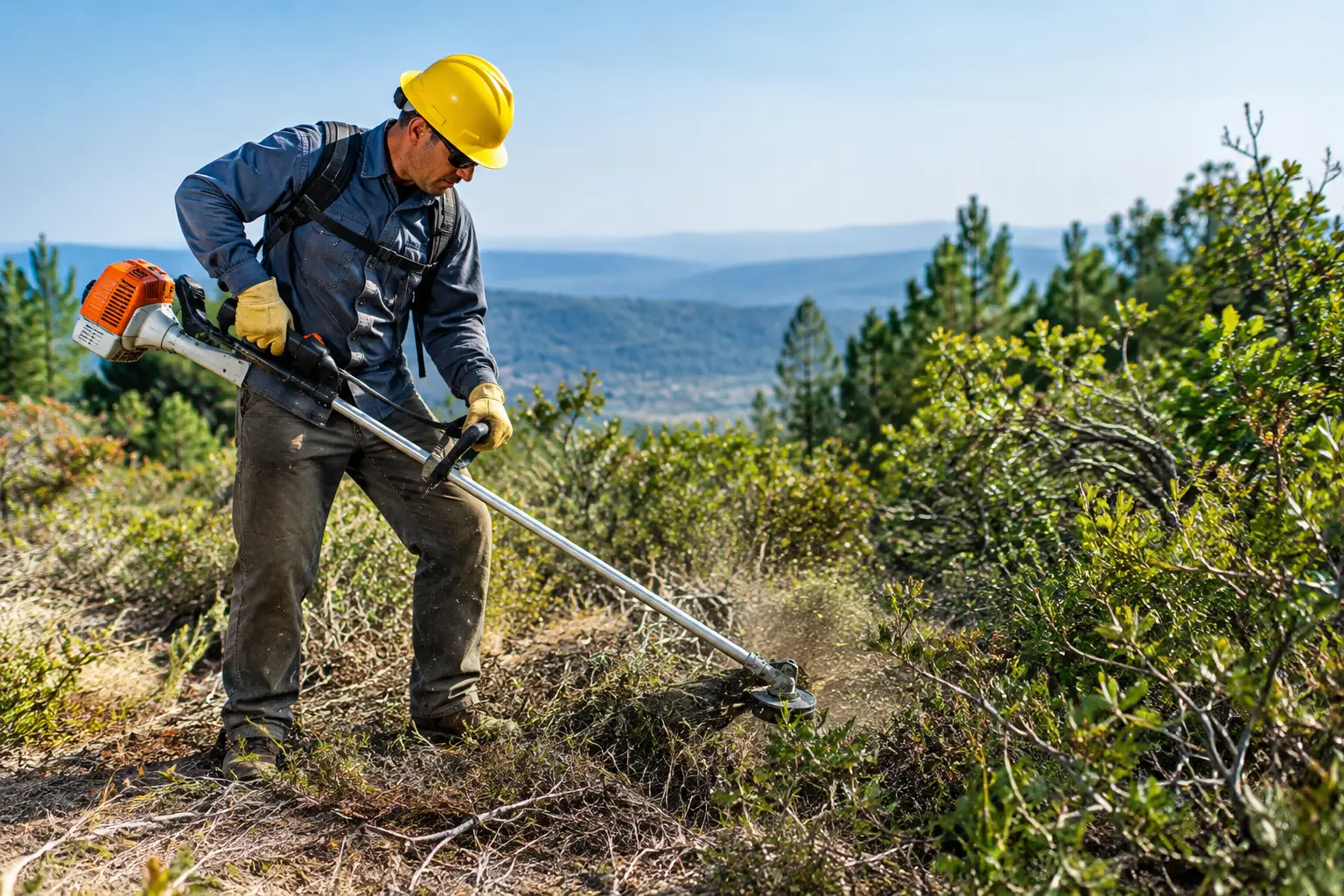
Brush Clearing for Fire Prevention That Works

A few weeks of dry weather can change an overgrown property fast. Tall grass, fallen limbs, palmetto, vines, and dense brush create connected fuel that can carry a ground fire toward a home, barn, equipment shed, or fence line. Brush clearing for fire prevention breaks up that fuel path and gives landowners a more manageable, usable property.
For acreage owners in the Florida Panhandle and Southern Alabama, fire risk is not limited to heavily forested land. A neglected field edge, an uncleared driveway, or a wooded area around outbuildings can become a problem when dry vegetation accumulates. The goal is not to strip every tree from the property. It is to remove and manage the fuels that allow fire to spread quickly.
Brush Clearing for Fire Prevention Starts at the Ground Level
Most fast-moving vegetation fires begin and travel through low material: dry grass, leaves, pine needles, brush, dead limbs, and small volunteer trees. When that material reaches upward into shrubs and low branches, it creates what forestry professionals call ladder fuels. A fire that starts low can then climb into the canopy, becoming harder to control and more dangerous to nearby structures.
A practical clearing plan focuses first on the vegetation that connects the ground to larger trees and buildings. That may include thick brush around a home site, overgrown fence rows, fallen storm debris, saplings growing beneath mature pines, and vegetation crowding a driveway or access road. Removing these materials reduces the amount of available fuel while improving visibility across the property.
Mature, healthy trees do not always need to be removed. In many cases, selective brush clearing and pruning create a safer spacing between the ground cover, tree limbs, and structures. The right approach depends on the property layout, terrain, vegetation density, and how the land will be used after clearing.
Focus on the Areas That Matter Most
Not every acre needs the same level of treatment. Property owners usually get the best result by addressing the areas where a fire would have the greatest consequences or where responders would need access.
Start around homes, cabins, barns, workshops, storage buildings, fuel tanks, and livestock areas. Brush that touches siding, grows beneath decks, or crowds a building wall should be removed. Keep combustible materials away from structures, including stacked firewood, old lumber, unused pallets, and equipment with dry vegetation built up around it.
Next, look at driveways, gates, and internal access roads. A narrow, brush-choked entrance can slow down a fire truck, utility crew, or equipment operator. Clearing vegetation back from access routes improves sightlines, gives vehicles room to pass, and helps keep a road open if limbs or debris fall during severe weather. On large properties, a dependable gravel road can serve both daily access needs and emergency access needs.
Property edges also deserve attention, especially where woods meet pasture, neighbors' land, or public roads. Clearing a perimeter can create a more defined transition between managed ground and natural timber. If fencing is part of the plan, clearing the line first makes installation more precise and gives landowners a cleaner, easier-to-maintain boundary.
Choose a Clearing Method That Fits the Land
The best method for brush clearing for fire prevention depends on what is growing, where it is located, and what the property needs next. A heavily wooded future home site requires a different approach than a pasture edge or a long rural driveway.
Forestry mulching is often a strong option for thick brush, small trees, vines, and undergrowth. The equipment cuts and processes vegetation into mulch that stays on the ground. That layer can help limit erosion, retain soil moisture, and reduce the need to haul away debris. It is particularly useful on uneven ground or in areas where preserving the root structure of larger trees matters.
Mulch is not a substitute for a maintenance plan. If it is left too thick near structures or allowed to build up over repeated clearing cycles, it can still contribute fuel. A qualified contractor can determine where mulching is appropriate, how much material should remain, and where debris needs to be removed instead.
Mechanical clearing and hauling may be the better choice near building pads, fence lines, drainage routes, or areas planned for construction. Stumps, root balls, and heavy debris can interfere with grading, driveways, foundations, and pasture use. Removing them at the beginning prevents costly rework later.
Prescribed burning can be a useful land-management practice under the right conditions, but it is not a casual do-it-yourself task. It requires proper planning, weather conditions, permits where required, trained personnel, and control lines. For many rural property owners, mechanical brush reduction is the more direct first step before considering any ongoing burn program.
Do Not Clear So Aggressively That You Create New Problems
More clearing is not always better. Removing all vegetation from a slope, drainage path, or sandy area can leave soil exposed to erosion. Heavy equipment can also affect wet ground, existing drainage patterns, and tree roots if the work is not planned carefully.
A durable plan balances fire reduction with drainage, privacy, shade, wildlife habitat, and future use. For example, a landowner may want to retain a line of mature trees along the road while removing dense underbrush beneath them. A pasture may need its fence row cleared without disturbing a drainage swale nearby. A future home site may require a wider cleared area, while the rest of the tract is managed selectively.
Before work begins, identify utilities, easements, septic areas, wetlands, drainage features, survey markers, and property lines. These details shape the scope of work and protect against avoidable damage. If a parcel is newly purchased or boundaries are unclear, confirming the survey before clearing or fencing is a wise investment.
Build a Property That Can Be Maintained
One-time clearing makes an immediate difference, but brush grows back. Long-term fire prevention depends on keeping vegetation from returning to the same dense condition. The best maintenance schedule varies with soil, rainfall, sunlight, grazing activity, and the species growing on the property.
Mowed areas around homes and buildings should be checked regularly during the growing season. Fence lines and road shoulders often need seasonal attention because they collect weeds, vines, and windblown debris. Wooded acreage may need periodic mulching or selective cutting every few years rather than annual full clearing.
Good access makes maintenance easier and less expensive. A stable driveway, well-placed gates, and clear travel routes allow mowing equipment, tractors, trailers, and service vehicles to reach the areas that need work. Drainage improvements also matter. Water that cuts ruts across an access road can prevent equipment from getting in when it is needed most.
Landowners with livestock should also consider how clearing affects containment and grazing. Opening an overgrown fence line can reveal damaged wire, leaning posts, or gaps that were hidden by brush. Coordinating clearing with perimeter fencing repairs creates a safer working area for people and a more secure boundary for animals.
Plan Before Fire Season Brings Dry Conditions
Waiting until vegetation is dry, brittle, and piled against a building limits the available options. Clearing work is easier to schedule and easier to manage when it is planned before peak dry periods. It also gives property owners time to address access issues, remove storm debris, improve drainage, and establish a maintenance routine.
Local requirements can vary by county, neighborhood, and property type, particularly near protected areas or when burning is considered. A site-specific assessment helps determine what should be cleared, what should remain, and how to carry out the work without creating erosion or access problems.
J4 Land Development can help property owners evaluate brush, access, fencing, and site conditions together, then build a practical scope around the way the land will actually be used. A well-cleared property is easier to reach, easier to maintain, and better prepared when dry weather puts pressure on the landscape. Request a quote before the next overgrowth cycle turns a manageable job into a larger one.
Comments