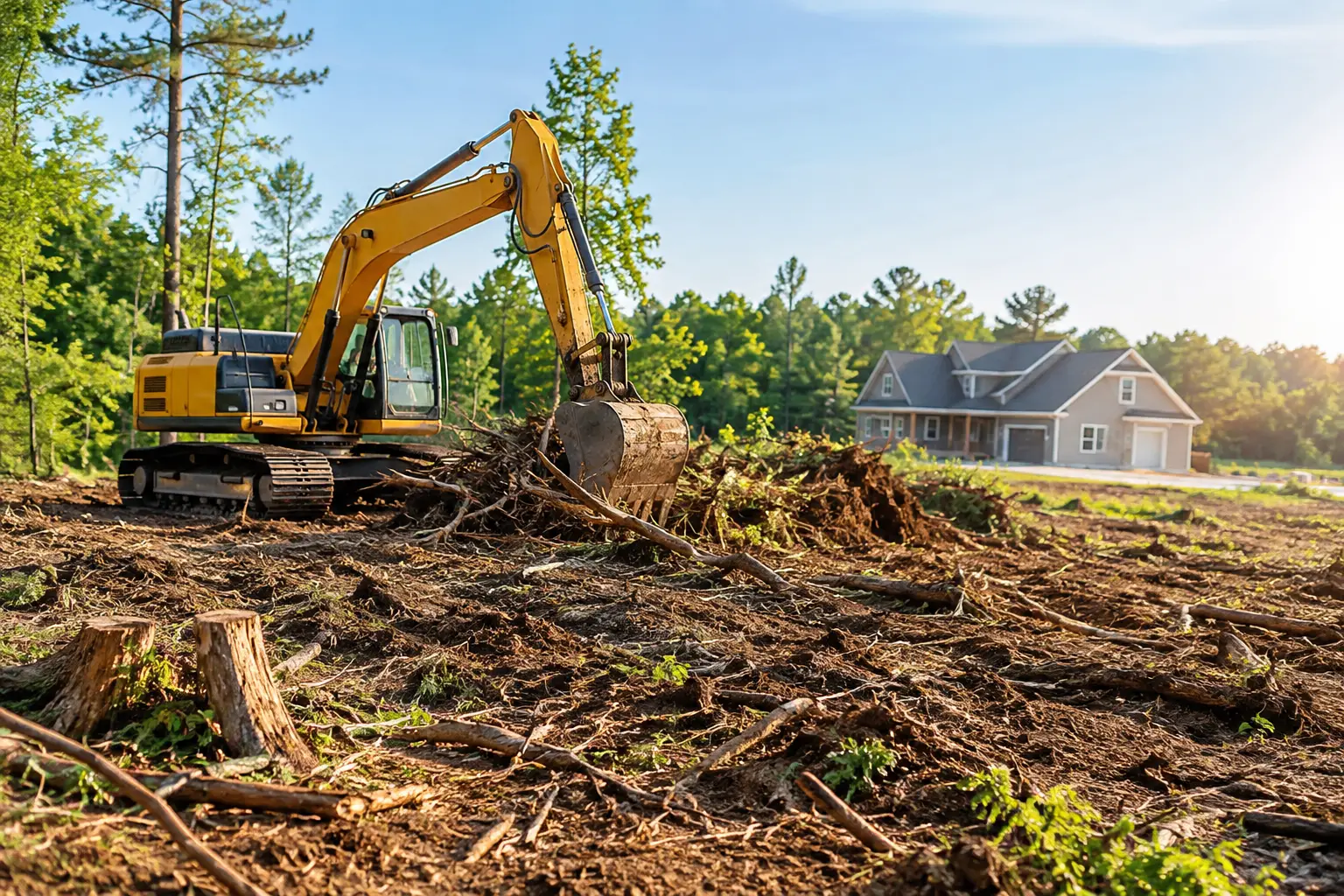
Lot Clearing Before Building a House the Right Way

A concrete truck cannot reach a homesite through soft ground, low-hanging limbs, and an overgrown entrance. That is why lot clearing before building a house should begin with a complete look at how the land will function, not simply which trees need to come down. The goal is a safe, accessible, build-ready site that supports the house, driveway, utilities, drainage, and the way you plan to use the rest of the property.
On wooded acreage in the Florida Panhandle and Southern Alabama, clearing choices made early can affect construction costs, water flow, privacy, and long-term maintenance. A careful plan protects the parts of the land worth keeping while creating dependable room for the work ahead.
Start With the Homesite, Not the Entire Property
It is tempting to clear every tree and patch of brush at once, especially on a raw parcel. In most cases, that creates more disturbance than necessary and can leave a property exposed, muddy, and harder to manage. A better approach is to define the homesite first, then identify the driveway route, parking and turnaround areas, utility corridors, septic area if needed, and drainage paths.
This layout determines the true clearing footprint. It also helps preserve mature trees that provide shade, screening, and character without placing them too close to the house. Trees near the foundation, roofline, or overhead service lines can become a future maintenance concern, while trees kept at a safe distance can add lasting value to the property.
A site walk is the time to consider how equipment will move. Excavators, dump trucks, concrete trucks, well rigs, utility crews, and delivery vehicles need more than a narrow trail through the woods. They need reliable access with adequate width, turning room, and ground that will hold up under weight.
Survey Boundaries and Check Restrictions First
Before clearing begins, confirm where the property lines are. An old fence line, a row of trees, or a neighbor's verbal direction is not a dependable boundary marker. A current survey helps prevent accidental clearing across a property line and gives a clear reference for setbacks, fencing, driveways, and building placement.
Local requirements also deserve attention before heavy equipment arrives. Depending on the parcel and jurisdiction, permits or approvals may apply to driveway connections, drainage work, tree removal, erosion control, septic systems, or work near wetlands and waterways. If your land has a recorded easement, verify where it is and whether other owners need continued access.
Call for utility locates before digging or stump removal. Rural parcels may have buried electric, water, gas, communications, or older service lines that are not obvious from the surface. Finding a line after it is damaged is an expensive way to learn where it runs.
Choose the Right Method for Lot Clearing Before Building a House
Not every piece of vegetation requires the same treatment. The proper method depends on tree size, brush density, slope, soil conditions, intended use, and whether the cleared material must be removed from the site.
Forestry mulching is often a practical choice for thick underbrush, small trees, and overgrown areas outside the main building pad. It reduces vegetation into mulch that can help limit erosion and suppress regrowth. It is useful for opening up acreage, creating sightlines, maintaining trails, and improving access while leaving the soil less disturbed than full excavation.
The house pad, driveway, septic field, and utility routes usually require more intensive preparation. Larger trees may need to be felled and removed, and stumps in construction areas generally need to be extracted or ground out. Leaving stumps under a future driveway or fill area can lead to settling as wood decays, which may create low spots, soft areas, or pavement problems later.
Burning or burying debris may seem like a simple answer, but both options carry trade-offs. Burn piles require appropriate conditions and compliance with local rules. Buried organic material can decompose and leave voids beneath finished grades. Hauling, chipping, mulching, or properly managed burning may each make sense depending on the site, but the decision should be made as part of the overall plan.
Build Access Before the Main Construction Starts
A good driveway is not an afterthought. It is the first working surface on the property and will carry traffic long before the house is complete. If the entrance is narrow, steep, wet, or poorly tied into the public road, every stage of construction becomes more difficult.
A durable access route begins with the right location. The shortest path is not always the best path if it crosses a low area, creates a sharp turn, or requires heavy trucks to climb a difficult grade. Once the route is established, clearing, shaping, drainage control, and a properly built gravel surface help create reliable access in wet weather and under construction traffic.
Culverts and ditches deserve careful attention. Water needs a planned route across or away from the driveway, not a chance to cut its own path during the first hard rain. A washed-out driveway can delay crews, damage vehicles, and add unnecessary repair costs before the foundation is even poured.
Grade for Water Before Water Becomes a Problem
Clearing changes how rain moves across a site. Tree cover and understory vegetation slow rainfall, while exposed soil and compacted equipment paths can send water quickly toward low spots. That makes drainage planning part of site preparation, not a finishing touch.
The home pad should be positioned and graded so water sheds away from the future foundation. The surrounding terrain may need shaping to direct runoff toward stable drainage areas, swales, ditches, or properly sized culverts. The exact solution depends on the natural slope, soil type, nearby drainage features, and how much of the lot will be developed.
Avoid stripping more topsoil than the project requires. Topsoil is valuable for final grading, grass establishment, and landscaped areas. Stockpiling it separately from subsoil and construction debris makes it easier to restore disturbed ground after the heavy work is finished.
On sloped or sandy sites, erosion control may be necessary while construction is underway. Mulch, temporary cover, silt barriers, and staged clearing can help keep soil where it belongs. This is especially important when the site drains toward a ditch, creek, pond, or neighboring property.
Coordinate Clearing With Utilities, Septic, and the Build Schedule
The best clearing plan accounts for work that comes next. Well drilling equipment needs a clear route and workspace. Utility providers may need unobstructed paths for poles, trenching, or underground service. Septic systems require a suitable area that should not be compacted by unnecessary traffic before installation.
Talk with your builder early about the proposed house location, finished floor elevation, foundation type, garage orientation, and staging needs. A slab home, crawlspace home, and elevated structure can have different grading requirements. The site should also leave room for material deliveries, waste containers, and equipment without damaging areas meant for final landscaping.
If you plan to add a barn, workshop, livestock fencing, garden, or additional living space later, mention it during planning. Clearing and access work can often be arranged to support those future improvements, saving you from reopening finished areas or building a second entrance down the road.
Keep the Site Secure and Maintainable
Once a parcel is opened up, it becomes easier to see and use, but it can also become easier for unauthorized vehicles to enter. A defined entrance, gate, and perimeter fencing can protect equipment, establish clear boundaries, and help secure livestock if the property will support animals.
The right amount of clearing also reduces ongoing maintenance. Dense brush close to the home can harbor pests, limit visibility, and create a fuel load during dry conditions. At the same time, clearing every edge of the property may remove valuable privacy and shade. The practical balance is a clean, defensible area around the house and access routes, with managed vegetation beyond it.
A properly prepared lot gives the builder a better starting point and gives you a property that works from day one. J4 Land Development can assess the terrain, access needs, clearing scope, grading, drainage, and future uses of your acreage to develop a precise plan. Before the first machine starts, make sure every cleared acre has a purpose - that care is what turns raw land into a dependable place to build.
Comments